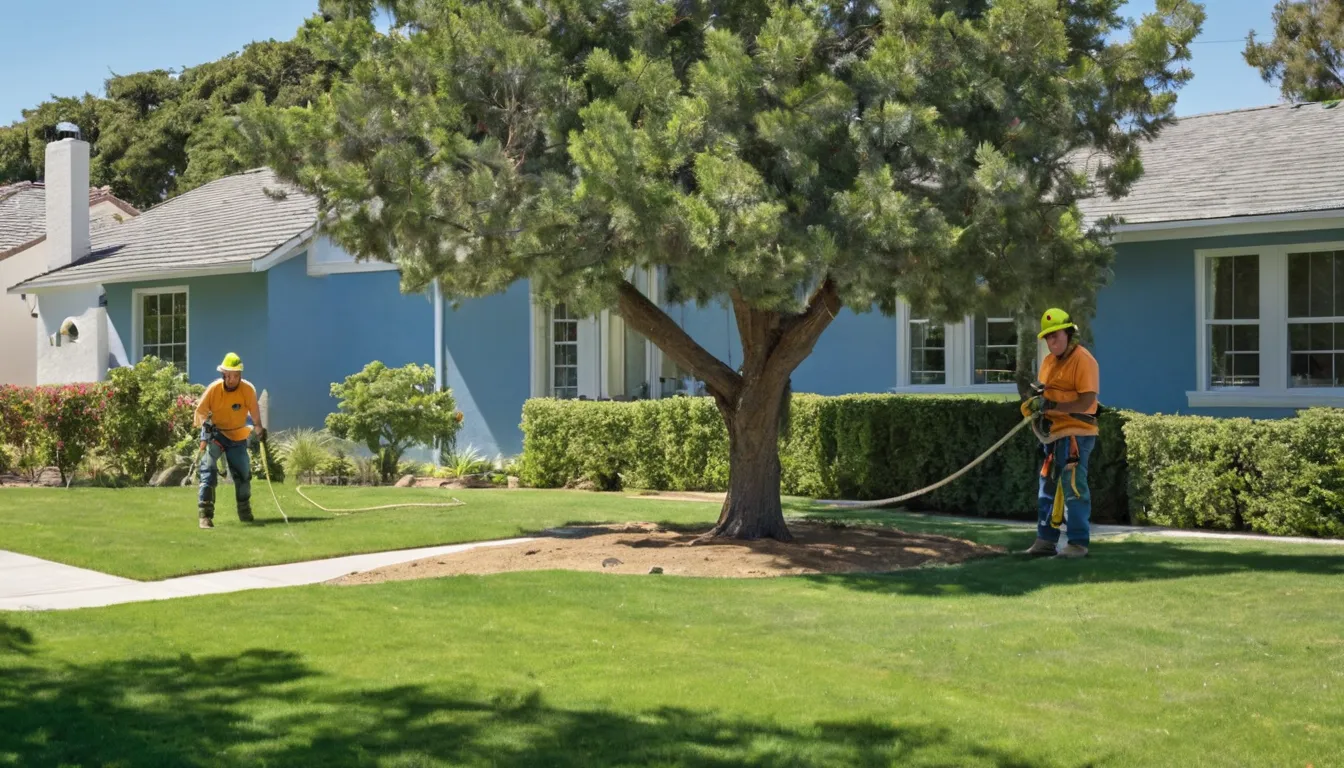
Tree Removal Done Safely by Local Providers
Request an estimate today
A lot of people think tree removal is just a saw and a strong back. In practice, the hard part is control. A trunk can weigh several tons, and one wrong cut can send it onto a roof, a fence or a power line. That is why most full removals belong with trained providers.
Bonesclosely Tree Service is a referral service. We do not cut trees. We connect homeowners in Desert Hot Springs and the Desert Hot Springs area with independent local providers who handle the felling, hauling and cleanup. You can request an estimate, compare quotes, and choose who you want. There is no obligation to hire anyone.
Start Here: Is This Tree an Emergency?
Some trees can wait a week. Others cannot. If a tree is leaning hard, split down the middle, or resting on a roof or fence, stay clear. Keep kids and pets away too.
If it is touching a power line, stay back and contact your utility first. Then Request a callback to check provider availability for the tree itself.
Myth: "A Small Tree Is a Weekend Job"
A lot of people think a 20-foot tree is easy. In practice, size is not the real risk. The risk is where the tree goes when it lets go. Trunks twist, branches snap back, and dead wood can break without warning.
That is why a tree falling service uses ropes, climbing gear and planned cuts. It is about control, not just cutting.
Where You Can Help From the Ground
You do not have to stand back and do nothing. A few jobs are safe and useful:
- Move cars, bins, toys and patio furniture out of the work zone.
- Take photos of the tree from a few angles for your estimate request.
- Note gates, side yards and anything that blocks truck access.
- Pick up small, already-fallen twigs once the job is done.
Where Professional Equipment Is Needed
Leave it to a provider if the work is above shoulder height. The same goes for any tree over a roof, near lines, or leaning toward a structure. Rigging, bucket trucks and cranes exist for these jobs. A ladder and a chainsaw are not a safe substitute.
Why Homeowners Remove Trees
Most removals start with one of a few reasons:
- The tree is dead, hollow or diseased.
- Storm damage left a broken or leaning trunk.
- Roots are pushing on a slab, a path or a sewer line.
- Branches hang over the roof and drop debris.
- Dry-season fire safety calls for more space around the house.
Older Homes Need Extra Care
Older bungalows and 1950s to 1980s tract homes often have surprises. Roofs may be aging. Past repairs may hide weak spots. Old clay or cast iron pipes can sit close to big roots.
Tell the provider your home's age. Ask them to look at the roofline, stucco and any cracks in a slab or raised foundation before work starts. Removing a large tree can shift soil, so a careful plan matters.
How Tree Removal Works
A provider visits, looks at the tree and the site, and gives a written quote. Then they plan the drop. Small trees may come down in one piece. Bigger ones are cut in sections and lowered with ropes.
Branches are chipped and the wood is cut up. Hauling is often part of the job, but confirm it in the quote.
What Affects the Price
Price depends on height, trunk width, and how close the tree is to buildings. Access matters too. A tight side yard costs more than an open lot. Dead or leaning trees can add risk, and so can wood that must be hauled away.
Stump grinding is often priced separately. Always ask for a written quote that lists what is and is not included.
Permits and Local Rules
Some cities protect certain trees by size or type. Homeowner associations may have their own rules. Check with your city office before you hire anyone.
Many providers know the local rules and can tell you if a permit is needed. Still, the responsibility to check is yours.
Choosing a Tree Removal Provider
Myth: the smallest number on a quote wins. Reality: a low quote can leave out cleanup or hauling. Use this signature rule: quote before cutting.
Ask each provider these questions:
- Can you show proof of liability and workers' compensation insurance?
- Does the quote include cleanup and hauling?
- How will you protect my roof, fence and lawn?
- Is stump work included or separate?
Storm Tree Clearance and Emergency Jobs
Winter rain events can soften soil and bring trees down. Storm tree clearance is often urgent, since a fallen trunk can block a driveway or press on a roof.
Emergency tree removal costs more than a planned job, and many providers can respond quickly. Availability varies, so Request a callback to check who is available near you.
Getting Ready for Removal Day
A little prep helps the job go smoothly:
- Clear the driveway and park on the street.
- Move anything fragile away from the fall zone.
- Tell neighbors, since noise and chip trucks are part of the day.
- Keep pets inside.
- Be reachable in case the provider has a question.
After the Tree Comes Down
Walk the yard with the provider and check that the work matches the quote. Look at the roof, fence and lawn. Ask about stump grinding if a stump remains.
The open spot may get more sun, so your lawn and plants may need a new watering routine. Consider replanting a smaller tree farther from the house.
Myth: "Insurance Covers Every Tree"
Not quite. Some policies may cover sudden damage, such as a tree falling on a house. Removing a healthy tree is usually not covered. Check your policy, and ask providers to help document damage for a claim.
Ready to Get a Quote?
Send your request, share a few photos, and compare what providers say. You are not obligated to hire anyone.
Prefer to talk it through? Request a callback and ask about availability.
What's Included
Written Quote First
Providers look at the tree and site, then explain the work and price in writing before any cutting begins.
Safe Felling
Trained crews use ropes, climbing gear and planned cuts to bring trees down away from your home.
Cleanup and Hauling
Many quotes cover chipping branches, cutting up wood and hauling debris, so confirm what is included.
Stump Options
Ask whether the stump stays, is cut low, or is ground down. Stump work is often priced separately.
Typical Tree Removal Costs
These are typical U.S. ranges and they vary by job. Tree size, access, nearby buildings and local rates all change the number, so always get a written quote before work starts.
| Item | Typical range | Notes |
|---|---|---|
| Small tree (under 30 ft) | $150 – $600 | Easy access, open yard |
| Medium tree (30–60 ft) | $500 – $1,500 | Often cut in sections |
| Large tree (over 60 ft) | $1,200 – $3,500 | May need a crane or bucket truck |
| Tree near house or lines | $800 – $3,000 | Extra rigging adds time |
| Emergency or storm job | $1,000 – $4,000 | Urgent timing can raise the price |
| Debris haul-away | $100 – $400 | Sometimes already in the quote |
How It Works
Request an Estimate
Tell us about the tree, add a few photos and share your contact details.
Get Matched With Providers
Independent local providers in our network review your request and reach out.
Compare Written Quotes
Check price, cleanup, stump work and insurance details before choosing.
Schedule and Prepare
Pick your provider, set a date and clear the work area.
Why Call Bonesclosely Tree Service
Clear Referrals
We connect you with independent local providers and never do the cutting ourselves.
Myth Busting
Plain advice on what is safe to do yourself and what is not.
Your Choice
Compare quotes and pick the provider you like. No obligation.
Older Homes
Tips for bungalows and tract homes with aging roofs and pipes.
Other Services
Need tree removal in Desert Hot Springs?
Tell us about your tree, add a photo if you have one, and request an estimate. A local provider in our network will follow up with next steps.
No obligationTree Removal FAQ
How much does it cost to remove a tree?
Typical U.S. prices run from a few hundred dollars for a small tree to several thousand for a large or hard-to-reach one. Height, access and nearby buildings matter. Ask for a written quote before any cutting.
Can I remove a tree myself?
You can help from the ground by clearing the area and taking photos. Cutting a tall tree, or one near a roof or lines, is risky and is better left to trained providers.
Do I need a permit to remove a tree?
It depends on your city, the tree's size and type, and any HOA rules. Check with your local city office first. Many providers know the local rules and can point you in the right direction.
Reach a local provider
Tell us about your tree, add a photo if you have one, and request an estimate. A local provider in our network will follow up with next steps.
No obligation